

Disclosure: This post has affiliate links. If you sign up or buy through them, I may earn a commission at no extra cost to you. As an Amazon Associate I earn from qualifying purchases.
Most self help books tell you to think positive and dream bigger. Mark Manson goes the other way. His big idea is simple: you only have so much energy to care about things, so pick carefully.
That's why this book has stuck around since it came out in 2016. It's blunt, funny, and easy to get through. It also has some real ideas under the jokes, along with a few places where I'd slow down before taking it at face value.
What the book is really about
You can't care about everything. Manson says the problem isn't that we care too little. It's that we care about the wrong things, like what strangers think or keeping up with everyone online. He's clear that this doesn't mean being indifferent. It means caring about something important enough that the small stuff stops running the show.
Wanting to feel better can make you feel worse. Manson calls this the backwards law, an idea he borrows from the philosopher Alan Watts. The harder you chase feeling good, the more you notice that you don't. Then you feel bad about feeling bad, and the loop feeds itself. If you've ever been anxious about being anxious, you already know how this goes.
Pick better values. Instead of chasing feeling good all the time, he says to choose what you're willing to struggle for. The struggle you pick shapes your life. His test for a good value is practical: it's based in reality, it's good for you and the people around you, and it's within your control. "Being honest" passes that test. "Being liked by everyone" doesn't.
Fault and responsibility aren't the same. Some things that happen to you aren't your fault. How you respond is still on you, and owning that gives you back your power. His example is someone leaving a baby on your doorstep. You didn't cause it, but now you have to decide what to do.
You don't have to be extraordinary. Manson pushes back on the idea that everyone has to be special. Letting go of that pressure can make ordinary days feel a lot better.
The ideas that stay with you
A few parts of the book are easy to carry around after it's over.
The way you keep score matters. Manson tells the story of Dave Mustaine, who was kicked out of Metallica before they got famous and went on to build Megadeth, a hugely successful band of his own. By Manson's telling, Mustaine still measured himself against the band that fired him. The point lands: if you're using the wrong measure, no amount of success will feel like enough.
Saying no is part of caring. If you won't turn anything down, nothing you say yes to means very much. Manson makes the case that honest limits are what make relationships trustworthy, and that people who can't hear no aren't really offering closeness.
You don't have to wait until you feel ready. He calls this the "do something" principle. Most of us assume it works in this order: get motivated, then act. He suggests that it often runs the other way:
- You do one small thing, even without wanting to.
- Doing it gives you a little momentum or a new idea.
- That makes the next small thing easier to start.
Where I'd slow down
This is where I read the book differently as a therapist. None of this means skip it. It just means use it for what it's good for.
Not caring about the wrong things is one thing. Not being able to feel much of anything is something else.
Numbness isn't the goal. The book is aimed at people who care too much about the wrong things. If you've stopped caring about much at all, the title might sound like permission, when it could be a sign of depression or exhaustion. Those deserve attention, not a shrug.
Responsibility can turn into self blame. The fault and responsibility idea helps a lot of people. But if you're living with the effects of trauma, "how you respond is on you" can land as one more way of saying it's your fault. Your responses to what happened to you usually had a reason. Understanding them comes before changing them.
Understanding it isn't the same as living it. You can finish this book agreeing with every word and still do the same things on Monday. That isn't a character flaw. Patterns tend to run on more than logic, which is what I get into in why knowing doesn't change you.
Why the audiobook works
The audiobook is narrated by Roger Wayne and runs about 5 hours and 17 minutes. That's a few commutes or a couple of long walks. Manson's style is casual and full of jokes, so it plays well out loud.
It also holds up well in pieces. The chapters are built around a single idea and a few stories, so you can stop and pick it back up without losing the thread. If you're someone who likes to underline, you may miss having a page in front of you. For a book like this, one or two ideas that stick are worth more than a stack of notes anyway.
Who it's for
This book is a good fit if you're tired of feel good advice that doesn't stick, you want a straight talking read about priorities, and you don't mind strong language. That last part matters. The title isn't kidding.
It's probably not the right pick if you're looking for gentle encouragement, if the profanity would get in the way for you, or if you're in a really hard stretch right now and need more than a new way of thinking about it.
How to listen for free
If you're new to Audible, you can start a free trial and get this book as part of it. You can cancel before the trial ends if it's not for you.
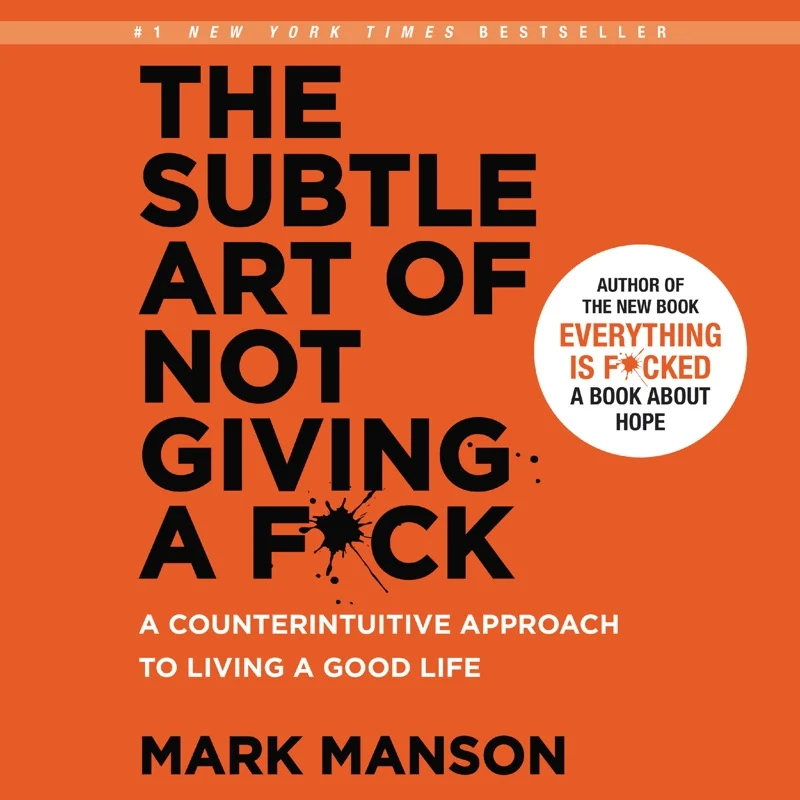
Listen to The Subtle Art of Not Giving a F*ck on Audible
Or start your Audible free trial here and pick any book you like.
Bottom line
If you want a book that tells you to stop chasing everything and focus on what matters, this is a great place to start. Take the part about choosing what you care about, and leave the part that doesn't fit. If you read it and notice that something underneath still isn't moving, that's useful to know too, and it's a good thing to bring to a real conversation.
Frequently asked questions
What is the main idea of The Subtle Art of Not Giving a F*ck?
You have a limited amount of energy to care about things, so the real question is what deserves it. Mark Manson argues that a good life comes from choosing better values and better problems, not from chasing good feelings all the time.
How long is the audiobook?
About 5 hours and 17 minutes, narrated by Roger Wayne. That's a few commutes or a couple of long walks.
Is the book therapy?
No. It's a useful way to think about priorities, but it can't assess what's going on with you or help you work through it. If you're dealing with ongoing low mood, anxiety that gets in the way of your days, or the effects of trauma, a therapist can offer something a book can't.
Is it a good book if I'm feeling numb or checked out?
It may not be the right place to start. The book is written for people who care too much about the wrong things. If you've stopped caring about much of anything, that can be a sign of depression or burnout, and it's worth talking to someone about.
Does the book have a lot of strong language?
Yes. The title isn't kidding, and the audiobook carries the same language, so keep that in mind if you're listening around kids or at work.
Ready to work on this?
Schedule a free 15-minute consultation. No pressure, just a real conversation about what's going on and what support might help.
Book a Free 15-Minute Call